Gardens & Landscapes / Free essay · 2026-10-19
A Garden Begins Before the Plants Arrive
The Wardian case makes the journey part of garden history: glass, survival and the infrastructures behind a planted landscape.
A garden appears rooted in a place. Its paths, borders and carefully chosen trees can make the finished arrangement seem self-contained. Yet a plant’s presence may depend on an earlier design problem: keeping it alive somewhere between one place and another. The Wardian case directs attention to that missing interval.
Kew describes a wooden-and-glass transport container developed from Nathaniel Bagshaw Ward’s experiments in 1829. An enclosed environment retained moisture while admitting light. A London-to-Sydney test in 1833 carried living plants successfully. Kew later used such cases for incoming specimens. The institution’s own historical account connects the device to botany and international trade. [1]
Those few facts change the scale at which we can read a garden. A plant is not simply selected and then placed in soil. Selection has to meet a chain of handling, transport and maintenance. An apparently natural composition can therefore depend on designed containers and working routines situated far outside the garden fence.
The case is especially interesting because it treats isolation as a condition of movement. Its protective boundary makes a long journey possible. Glass separates a small environment from some of the surrounding hazards while preserving a relationship with light. We can read this as an architectural problem in miniature: what must cross the boundary, and what must be kept outside?
It would be misleading to turn that reading into the claim that every enclosed case worked equally well. A container offers a set of conditions, not a universal guarantee. The kinds of plants, their condition and the demands of the journey remain relevant. The design historian needs to ask what a device enabled without treating its existence as proof of every successful arrival.
There is a similar caution around the word discovery. A European collection’s receipt of a plant does not mean that the species had previously been unknown to the people living where it grew. Arrival, classification and local knowledge are different kinds of history. A garden label can report an institutional date while leaving those other histories unresolved.
Kew’s more recent discussion explicitly places the cases within the history of the British Empire. [2] That context invites a question rather than an automatic answer about every specimen: who organised a particular journey, who supplied the labour, and who was able to decide what moved? A claim about a specific transfer requires its own evidence. The device alone cannot tell us who consented or benefited.
To look at a garden through transport is therefore to distinguish several kinds of design. There is the visible arrangement of planting. There is the technical arrangement that makes relocation possible. And there is the institutional arrangement that selects, names and records what arrives. A photograph of a border may show the first while concealing the other two.
Try choosing a single plant in a documented garden collection. Record its displayed name, the source of that name, any accession date and any stated place of origin. Keep a separate list of what is missing. Do not fill a gap with an imagined voyage. The result may be less satisfying than a complete adventure story, but it is a stronger starting point for historical research.
The Wardian case shifts the question from what a garden looks like to what had to happen before it could look that way. This does not remove pleasure from looking. It gives the pleasure a longer history, extending from the planted ground back into the journeys and systems that made arrival possible.
Sources & further reading
- [1] Kew, The Wardian case: Botany game changer: https://www.kew.org/read-and-watch/how-wardian-case-changed-botanical-world
- [2] Kew, Unboxing the history of plant transportation: https://www.kew.org/read-and-watch/wardian-case-dig-deeper
Source records checked 2026-10-19. Original editorial text by Odd Index; image rights are stated in the caption.
Read next
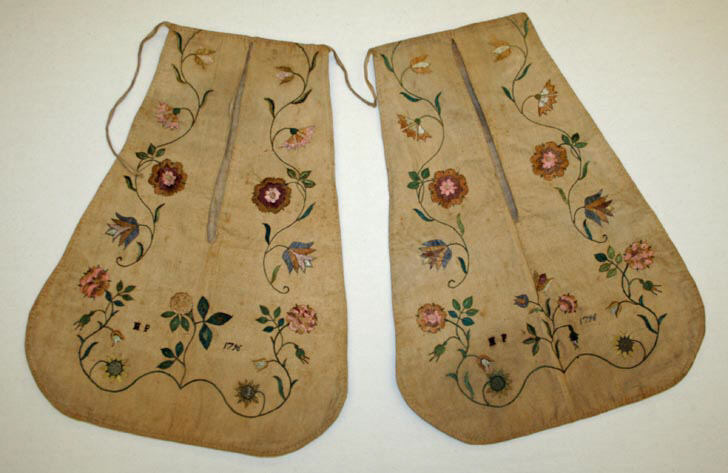 Dress & Power · Free to read
A Pocket Is a Question of Access
A detachable eighteenth-century pocket complicates the story that women simply had no useful storage. Look at the opening, the tie and the route of the hand.
Read the essay ↗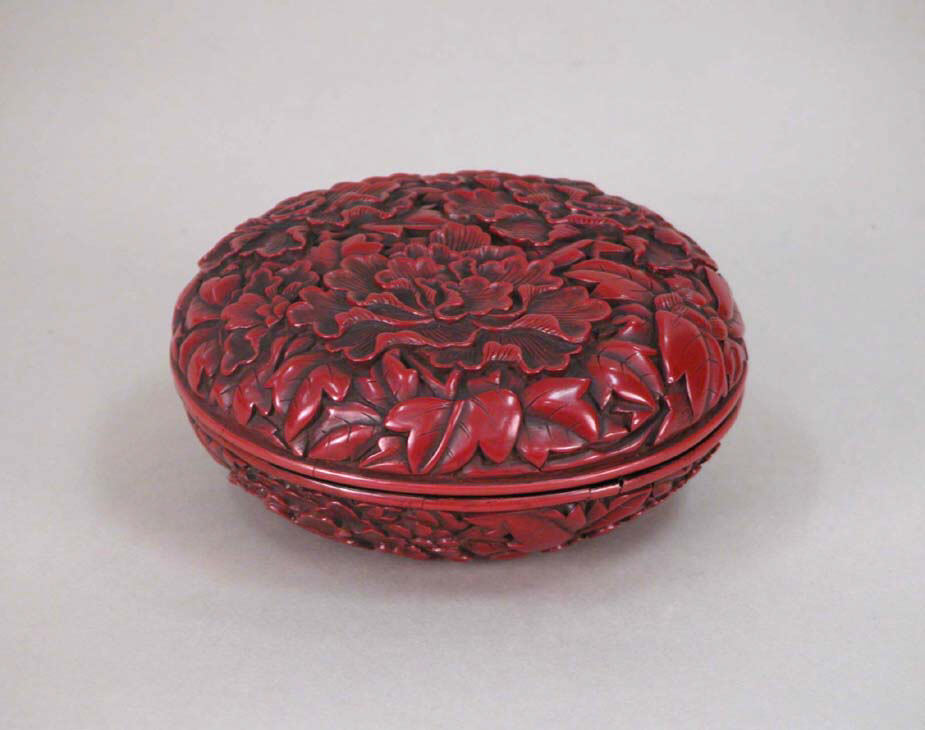 Material Histories · Free to read
Lacquer: A Surface Made of Time
A carved red box reveals why a finish is not merely the last step: building a surface can create the material from which ornament is cut.
Read the essay ↗Dossier · Member previewFrom Object to Argument: A Research Workbook
A reusable method for investigating gardens, dress and materials: source records, competing explanations and three worked research plans.
Read the preview ↗