Material Histories / Free essay · 2026-10-19
Lacquer: A Surface Made of Time
A carved red box reveals why a finish is not merely the last step: building a surface can create the material from which ornament is cut.
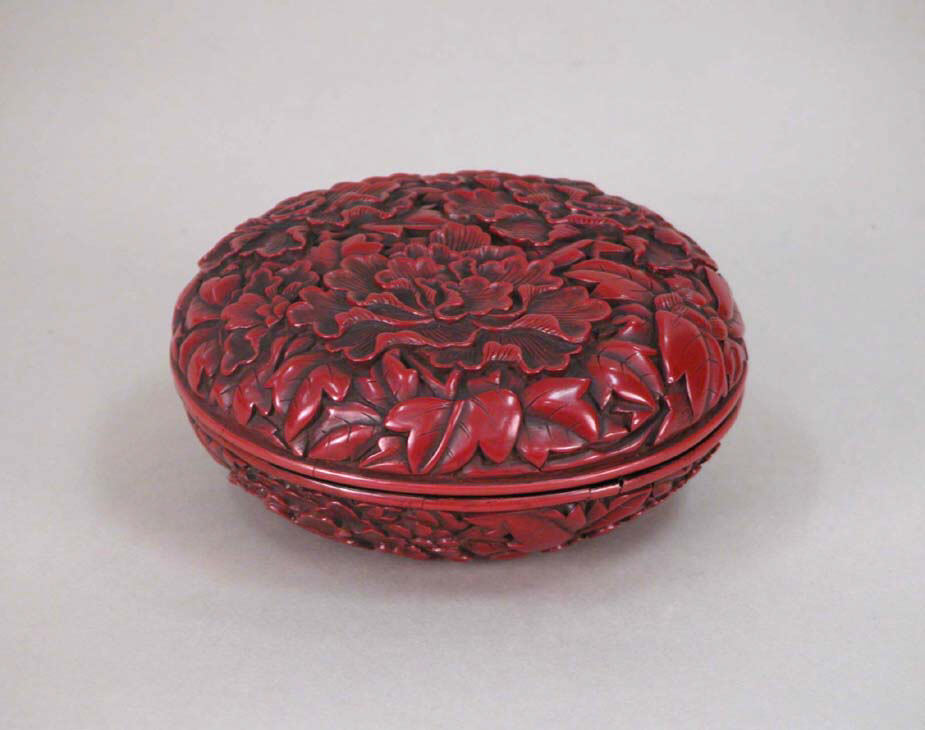
A glossy surface is easy to describe as a finish, as though the real object existed first and appearance arrived at the end. Carved lacquer unsettles that sequence. The surface is built into sufficient depth to become something that can be cut. Decoration depends on making a material body, not simply placing an image on top of one.
The Met’s Covered box with peonies is a fifteenth-century Chinese object in carved red lacquer. Its catalogue notes that a Xuande reign mark was probably added later. The museum’s broader technical account explains that carved lacquer involves building thin coatings into layers and carving the resulting thickness. These records provide both a named object and a process through which to read it. [1–2]
The later mark is an especially useful interruption to an easy story. An inscription can look authoritative while belonging to a different moment from the object it names. Reading a material object therefore requires attention to different layers of evidence: the shaped surface, a written claim and the museum’s reason for qualifying that claim. A legible date is not automatically a secure date.
For the design question, start with relief. A red floral form can be read as an image, but carved decoration also produces edges, recesses and shadows. In a photograph, illumination can strengthen or flatten those relationships. A digital reproduction lets us examine the organisation of the motif while leaving the depth and physical surface only partially available.
The distinction between adding and removing material matters here. Painting can place colour on a support. Carving removes material that has already been accumulated. In lacquer work, accumulation is part of the preparation for removal. A smooth final object can conceal that sequence, making labour appear as an immediate property of a luxurious surface.
That is an interpretation of the production logic, not a calculation of this box’s working hours. The sources do not establish the number of coats or the duration of every operation on this particular object. A general account of a demanding technique cannot be converted into an exact labour estimate without object-specific evidence.
The box also asks us to consider scale. At a little over ten centimetres in diameter, as catalogued by the Met, it belongs to an encounter quite different from a monumental architectural relief. [1] Enlarging its photograph can make the ornament feel expansive, but the physical object brings that complexity into a small field. Scale is part of the design, not incidental catalogue information.
A counterargument is that a viewer can enjoy the ornament without knowing anything about its making. That is true. Material history does not invalidate an immediate visual response. It changes the questions that can follow it: which forms depend on this process, what alternatives would produce different edges, and which features of the reproduction hide the object’s construction?
Try drawing two diagrams. In the first, draw the flower as a flat contour. In the second, indicate only high and low areas. The diagrams will not reconstruct the technique, but they distinguish the image of a peony from the spatial decisions through which a peony becomes ornament. Comparing them keeps iconography and fabrication in conversation.
A material history is strongest when it resists both mystification and reduction. The box is not valuable merely because it is old, nor can its appearance be explained by chemistry alone. Its effect emerges from a specific relationship between process, form, scale and subsequent attribution. The surface holds those questions together.
Sources & further reading
- [1] The Metropolitan Museum of Art, Covered box with peonies, 50.221.46a, b: https://www.metmuseum.org/art/collection/search/60971
- [2] The Metropolitan Museum of Art, Lacquerware of East Asia: https://www.metmuseum.org/essays/lacquerware-of-east-asia
Source records checked 2026-10-19. Original editorial text by Odd Index; image rights are stated in the caption.
Read next
A Garden Begins Before the Plants Arrive
The Wardian case makes the journey part of garden history: glass, survival and the infrastructures behind a planted landscape.
Read the essay ↗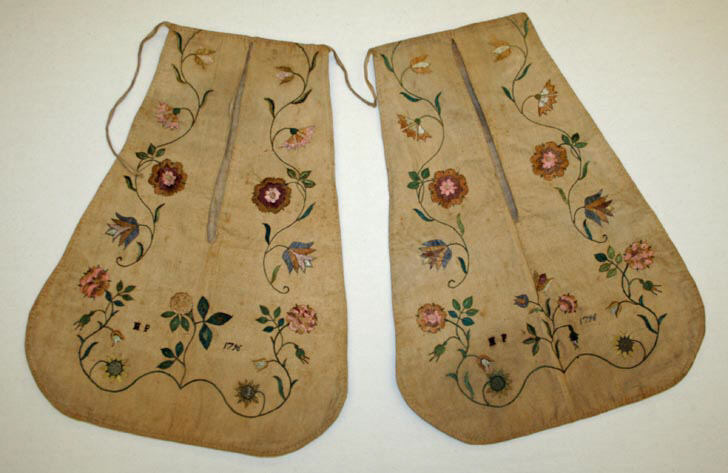 Dress & Power · Free to read
A Pocket Is a Question of Access
A detachable eighteenth-century pocket complicates the story that women simply had no useful storage. Look at the opening, the tie and the route of the hand.
Read the essay ↗Dossier · Member previewFrom Object to Argument: A Research Workbook
A reusable method for investigating gardens, dress and materials: source records, competing explanations and three worked research plans.
Read the preview ↗