Dress & Power / Free essay · 2026-10-19
A Pocket Is a Question of Access
A detachable eighteenth-century pocket complicates the story that women simply had no useful storage. Look at the opening, the tie and the route of the hand.
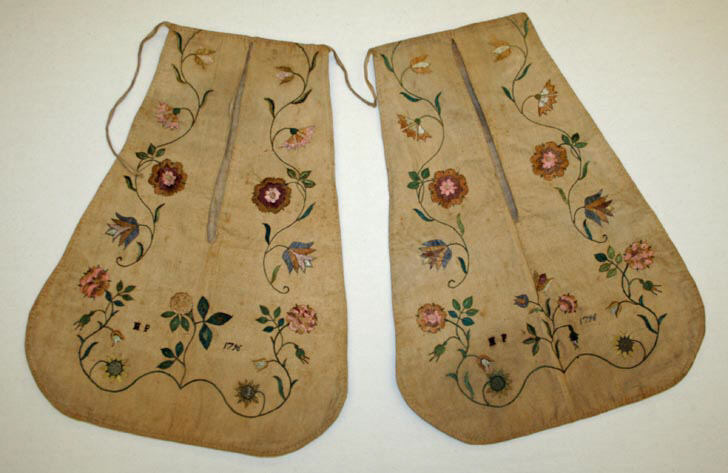
A pocket is often described by what it can hold. A more revealing starting point is how it can be reached. Does the hand enter directly, pass through another layer of clothing, or set down a bag first? Storage becomes a question of movement, and movement makes the relationship between dress and everyday power concrete.
The Metropolitan Museum of Art records this pocket as probably American and dates it to 1796. Its catalogue explains that such pockets were tied at the waist beneath clothing and reached through openings in outer layers. The V&A documents the wider European history of detachable tie-on pockets and cautions against treating bags as their simple replacements. [1–2]
This history complicates a familiar complaint about the absence of pockets in women’s dress. The complaint may describe particular modern garments accurately; it should not be projected unchanged over several centuries. A detachable pocket and a sewn-in pocket offer different arrangements of storage. Neither is understood well by merely counting visible openings in a dress.
Look first at the separation between the pocket and the garment. Detachability allows a container to have a life across changes of clothing. That is a useful design possibility, although it does not prove how any particular owner used this surviving example. An available function and a documented personal habit are different kinds of evidence.
Now consider the route between the hand and the contents. A concealed container needs a usable alignment between layers. The pocket’s capacity is only one part of the system; the outer garment must also permit access. This is why the object should be read alongside clothing rather than as a miniature bag floating free of the body.
That reading suggests a more precise vocabulary for discussing power. Instead of claiming that a pocket necessarily emancipates its wearer, ask which actions become easier: carrying an item, keeping it close, moving with free hands, retrieving it without help. These are design questions that can be compared. Their broader social consequences need further historical evidence.
Concealment is similarly ambiguous. It can support privacy, but it can also make access awkward or contents difficult to monitor. Visibility is not always a benefit, and hiddenness is not always a restriction. What matters is the relationship between the wearer, the object carried and the situation in which it is needed.
The survival of embroidered examples can also distort the story if ornament becomes the only topic. Decoration and usefulness are not mutually exclusive. A storage object can have a carefully worked surface while serving a practical task. Conversely, an elaborate surviving object cannot stand for every person’s resources or every kind of daily labour.
A useful contemporary comparison is a phone. Compare three carrying positions without assuming they are equivalent: a sewn-in pocket, a detachable waist container and a handheld bag. Describe retrieval, closure, weight and the need for a free hand. Then stop before claiming that this exercise reproduces an eighteenth-century wearer’s experience. It tests present design questions, not historical identity.
The point is not to replace one universal story with another. It is to make the relationship between clothes and action visible at the scale of a specific object. A pocket allocates capacity and access. Following the hand through the layers gives a more exact account of that allocation than a slogan about freedom alone.
Sources & further reading
- [1] The Metropolitan Museum of Art, Pocket, 1796, 1979.346.200: https://www.metmuseum.org/art/collection/search/110121
- [2] V&A, Women’s tie-on pockets: https://www.vam.ac.uk/articles/womens-tie-pockets
Source records checked 2026-10-19. Original editorial text by Odd Index; image rights are stated in the caption.
Read next
A Garden Begins Before the Plants Arrive
The Wardian case makes the journey part of garden history: glass, survival and the infrastructures behind a planted landscape.
Read the essay ↗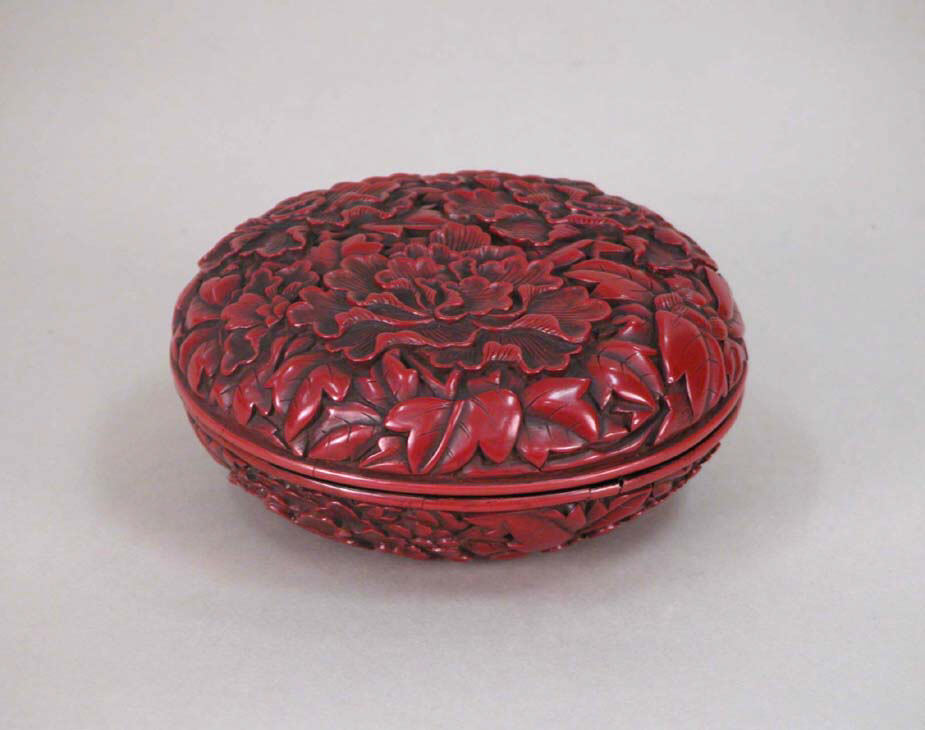 Material Histories · Free to read
Lacquer: A Surface Made of Time
A carved red box reveals why a finish is not merely the last step: building a surface can create the material from which ornament is cut.
Read the essay ↗Dossier · Member previewFrom Object to Argument: A Research Workbook
A reusable method for investigating gardens, dress and materials: source records, competing explanations and three worked research plans.
Read the preview ↗