Objects / Design criticism / Free essay
The Tiffany Lamp That Kept Its Oil Tank
A peacock-glass shade, a surviving kerosene reservoir and an electric attachment complicate the story of modern lighting.
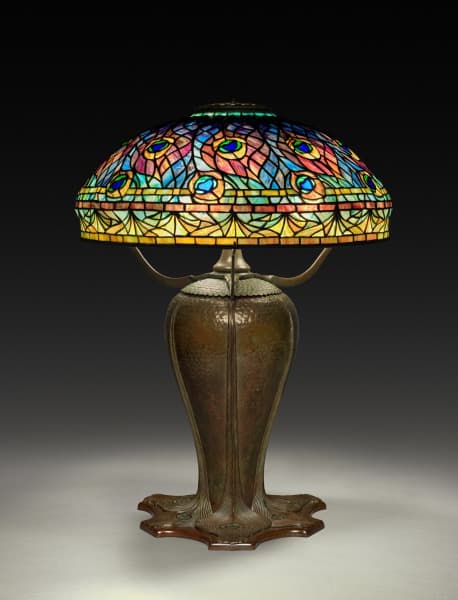
The surprise in Tiffany Studios’ Peacock Table Lamp is below the feathers. The Cleveland Museum of Art’s example, dated about 1902, retains a kerosene reservoir and double wick as well as an attachment for electric bulbs. Its glamorous shade belongs to a machine that could accommodate different domestic energy systems. The object is more complicated than an old-fashioned decoration wrapped around a modern light.
In the museum photograph, bright eyes of colour gather across the shallow dome. Dark divisions between the glass pieces keep interrupting the shimmer. That interruption is productive: the image of feathers is also an account of how the surface has been assembled. The design offers a continuous display without pretending to be a continuous material.
The lower band changes the rhythm. Its smaller, repeated forms make a firmer edge beneath the spreading feather pattern. Above it, the eye moves between the coloured centres; below it, the border brings that wandering movement back under control. Excess here has a structure. The shade is lavish without being a random collection of lovely fragments.
The bronze body provides a second tempo. It narrows and broadens below the dome, carrying raised lines down towards a spreading foot. The glass appears busy and changeable; the support seems comparatively slow. Neither half needs to imitate a whole bird for the relationship to work. The lamp lets a natural motif organise a manufactured object rather than turning the object into a small animal sculpture.
This is a reading of the published photograph, not a report of standing beside the lamp. The image cannot establish the exact colour of its light in a room, the temperature of the shade, or how easily the apparatus was serviced. A photograph that makes the glass look radiant can also hide the ordinary maintenance that keeps a lamp useful.
The museum’s account places the retained oil equipment within a period of uneven household electrification. That makes the adapter more than an amusing technical leftover. Our interpretation is that the lamp negotiates a transition: a desirable object could enter a home before that home had committed to a particular lighting infrastructure. The decorative shell and the energy supply did not have to change at the same speed.
An object that tolerates more than one system can look forward without demanding that everything around it be replaced immediately. That is a useful challenge to design histories that identify progress with a single clean break. It does not prove that this lamp was cheap, efficient or accessible to everyone. Compatibility and affordability are separate achievements.
The colour was also a designed choice, not merely a magical effect of glass. A related Tiffany Studios drawing at the Met, Drawing for “Dragonfly (Flying Round)” Lampshades, about 1905–10, presents paired studies in different palettes. The Met describes it as evidence of colourway options for a client. It is a different design, not a drawing for this Peacock lamp, but it helps us see the workshop’s output as a system of decisions and variants.
That distinction changes how one looks at luxury. A repeatable model need not be visually identical in every version. Pattern provides continuity while material and colour choices can produce difference. The critical question is who makes those choices, and which parts of that work survive in the object’s name.
“Tiffany” is a powerful shorthand, but it can conceal a division of labour. The New York Historical’s account of Clara Driscoll describes her leadership of a women’s glass-cutting department and the selection of glass by its workers. It also records restrictions on women’s employment, including a rule against continuing after marriage. The beautiful surface came from an organised workplace with unequal constraints, not simply from one famous individual’s taste.
Attribution should remain precise. The Cleveland record lists this Peacock lamp’s designer as probably Clara Wolcott Driscoll, with Tiffany Studios as maker. Its more confident descriptive prose does not cancel that qualifier. Recovering a woman’s contribution matters; replacing a museum’s uncertainty with a satisfying certainty would make the credit less trustworthy.
The lamp’s appeal survives those complications. Indeed, they make its richness more interesting. A viewer can enjoy the coloured feathers while asking about the fuel beneath them and the hands that selected the glass. Decoration is not an obstacle to understanding this object. It is where material assembly, household technology and commercial authorship become visible together.
Look once for the feather eyes, again for the seams, and finally for the support beneath the shade. Each pass gives the object a different centre. The strongest design criticism need not decide whether ornament or function wins. Here the more revealing question is how an intensely ornamental object made room for an uncertain technological future.
Published 16 October 2026. Visual observations refer to the museum’s online image; no firsthand visit or handling is claimed. The museum lists the object as not on view when checked. Historical facts, attribution and image rights were checked against the institutional sources below.
Sources & further reading
- Cleveland Museum of Art: Peacock Table Lamp, 2018.281 — object record, attribution and retained oil/electric apparatus; checked 16 October 2026 — https://www.clevelandart.org/art/2018.281
- The Met: Drawing for “Dragonfly (Flying Round)” Lampshades, 67.654.464 — a separate design showing colourway variants — https://www.metmuseum.org/art/collection/search/16476
- The New York Historical: Clara Driscoll and the Tiffany Girls — women’s work and employment restrictions — https://wams.nyhistory.org/primary-source/clara-driscoll-and-the-tiffany-girls/
- Cleveland Museum of Art: Tiffany in Bloom — further reading on Driscoll and the lamp department, 11 October 2019 — https://www.clevelandart.org/articles/tiffany-bloom
- Cleveland Museum of Art: Open Access — CC0 image reuse terms — https://www.clevelandart.org/open-access
Read next
 Objects · Free to read
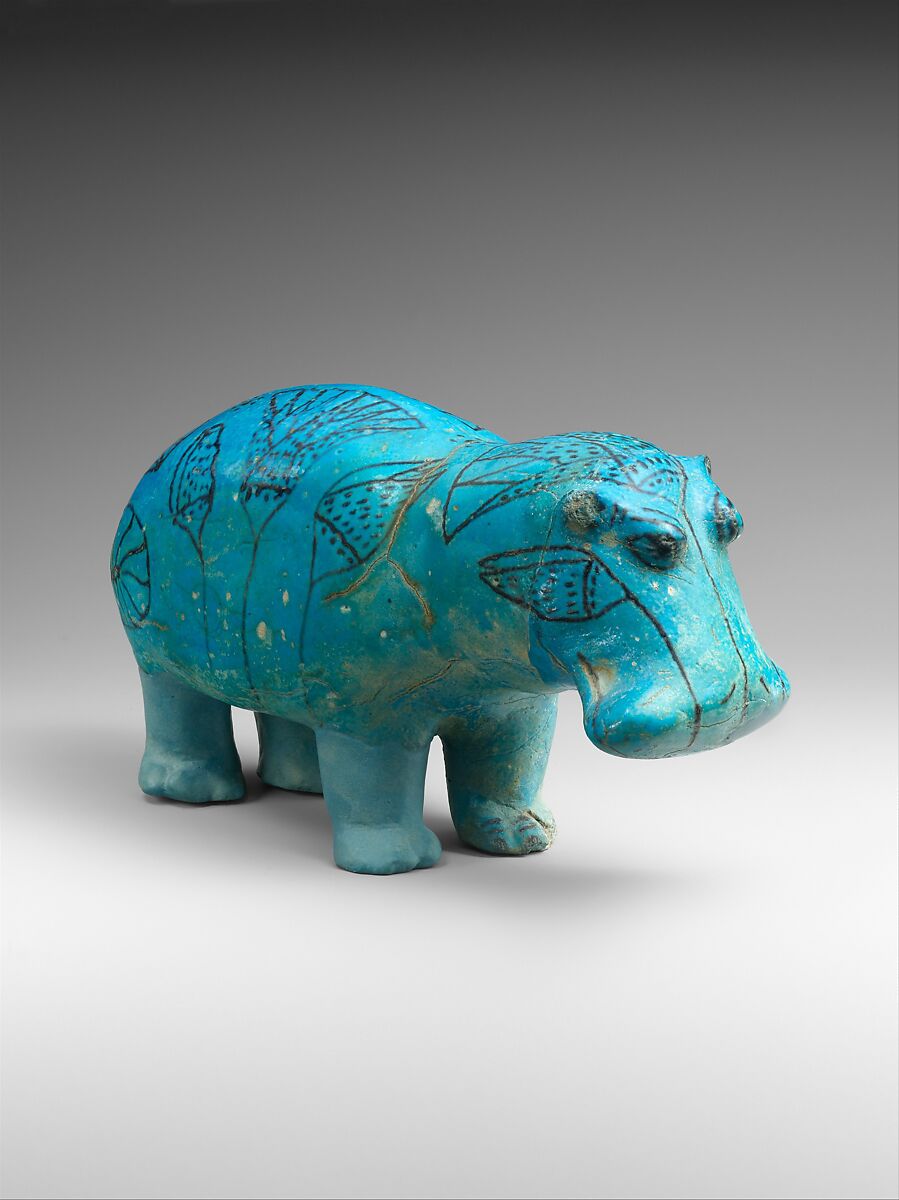
The Blue Hippo Carries More Than a Pattern
William’s lotus-covered body is at once an animal, a landscape and a repaired object. Its friendliness is the beginning of a reading, not the end.
Read the essay ↗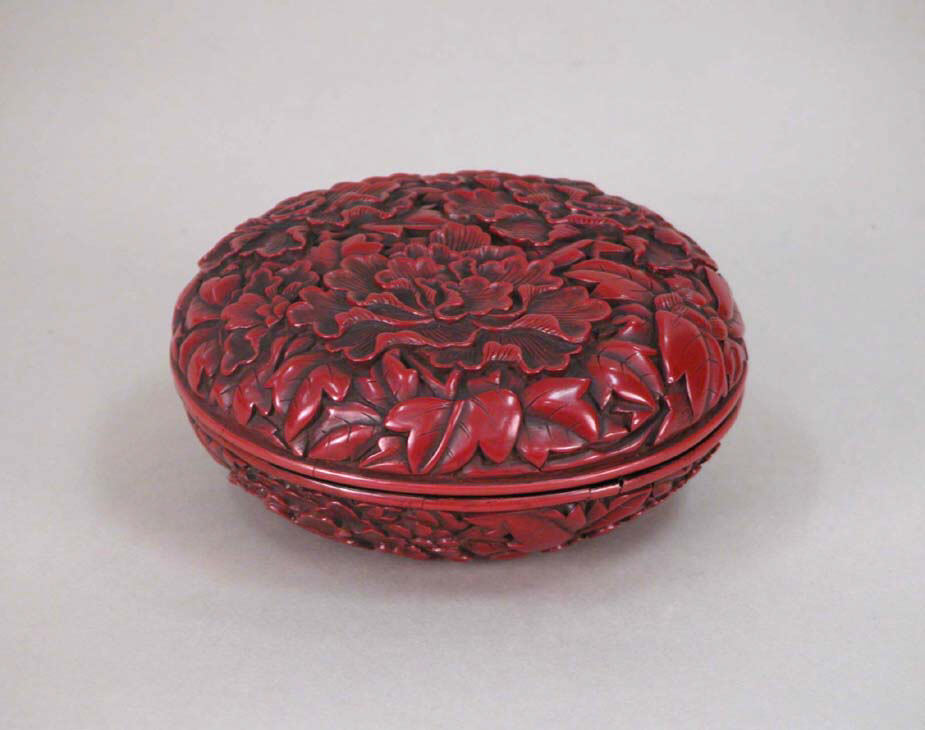 Material Histories · Free to read
Lacquer: A Surface Made of Time
A carved red box reveals why a finish is not merely the last step: building a surface can create the material from which ornament is cut.
Read the essay ↗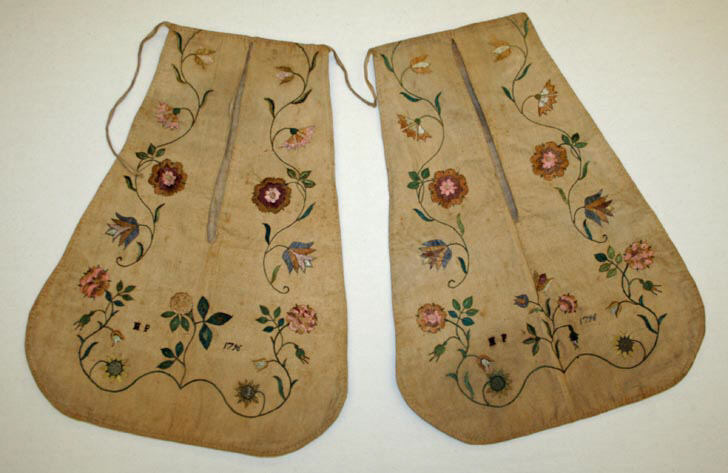 Dress & Power · Free to read
A Pocket Is a Question of Access
A detachable eighteenth-century pocket complicates the story that women simply had no useful storage. Look at the opening, the tie and the route of the hand.
Read the essay ↗