Objects / Free essay
The Chair That Wants to Be Looked At
Rietveld's Red Blue Chair makes a useful starting point for asking what we expect furniture to do.
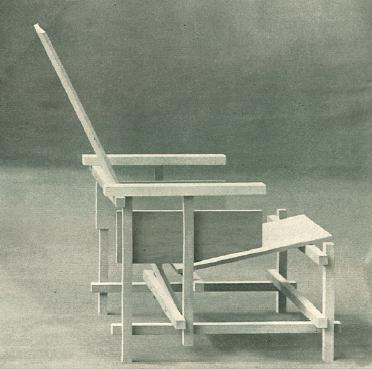
A chair has an unusually direct relationship with a body. You lower yourself into it and find out whether its promise is true. A painting can keep you at a distance. A chair eventually has to negotiate with your back.
Gerrit Rietveld's Red Blue Chair makes that negotiation visible before anyone sits down. Its red back and blue seat read as distinct planes, held within a black framework punctuated by yellow ends. There is little to conceal the construction. You can follow a horizontal member and see where another element crosses it. The chair seems to arrive with its own diagram.
MoMA dates the work to 1918–1923, explaining that the primary-colour scheme was applied around 1923 to a design first made in 1918. The museum also notes Rietveld's intention to use standard lumber sizes and a simple construction suited to eventual mass production. [1] This matters because the chair's appearance can invite the wrong assumption: a conspicuously artistic object must have been conceived as a rare decorative luxury.
Its visual clarity suggests another ambition. Furniture could participate in an ordered environment rather than disappear into the background. The point is legible in the object itself: the frame, seat and back remain separately understandable. The chair asks the eye to keep working even after it has identified somewhere to sit.
Whether a particular person finds it comfortable requires an actual encounter. A photograph cannot settle that question, and calling every angular chair uncomfortable is lazy criticism. But the image does expose a conflict in our expectations. We want furniture to serve us quietly, while often admiring objects precisely because they make a forceful statement.
Consider how the chair changes across settings. In a room furnished around it, it can be one part of a spatial argument. In a museum, it becomes something you walk around. In a product photograph, it can become a compact sign for cultivated taste. The wood may stay the same while the permission to touch it, the distance around it and the reason for its presence change.
This also changes what counts as success. A museum visitor may value a chair for making a design problem visible. A buyer furnishing a small apartment may need it to survive hours of sitting and the arrival of guests. Neither judgment is inherently superior. Trouble starts when the first is used to dismiss the second, as if a sore back were evidence that someone had failed to understand modernism.
There is also the person who owns a visually assertive chair but seldom sits in it. That choice need not be fraudulent. A room can hold an object because looking at it is pleasurable. The useful question is whether the owner understands the purchase. Buying furniture as sculpture is different from discovering, too late, that the sculpture is your only chair.
When looking at a design object, separate three judgments: what the form lets you understand, what the body can do with it, and what displaying it says about the owner. These judgments can support one another. They can also pull apart.
The Red Blue Chair is interesting because it keeps those tensions exposed. Its structure does not let you forget that sitting has been designed. Even through a photograph, it gives you a reason to examine a more ordinary chair nearby: where its pieces meet, what its upholstery hides, and how much of its apparent ease is an achievement you usually fail to notice.
Sources & further reading
- [1] Museum of Modern Art, Gerrit Rietveld, Red Blue Chair, 1918–1923. https://www.moma.org/collection/works/4044/
Read next
 Objects · Free to read
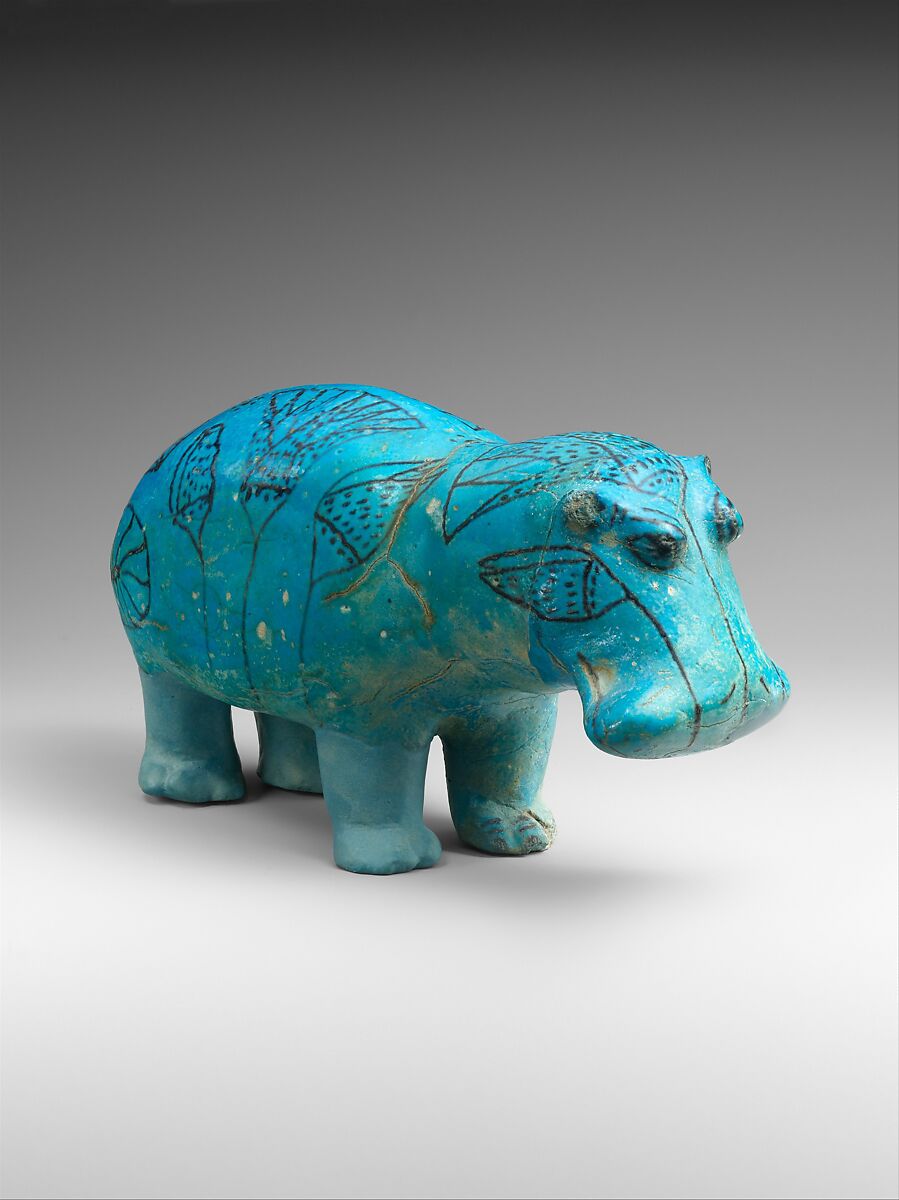
The Blue Hippo Carries More Than a Pattern
William’s lotus-covered body is at once an animal, a landscape and a repaired object. Its friendliness is the beginning of a reading, not the end.
Read the essay ↗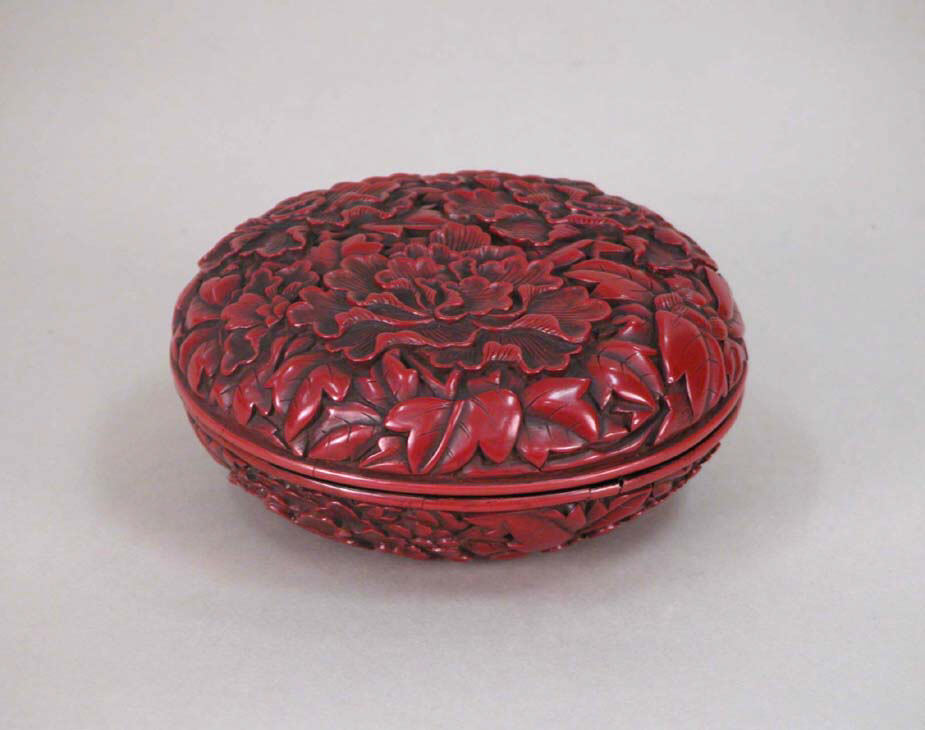 Material Histories · Free to read
Lacquer: A Surface Made of Time
A carved red box reveals why a finish is not merely the last step: building a surface can create the material from which ornament is cut.
Read the essay ↗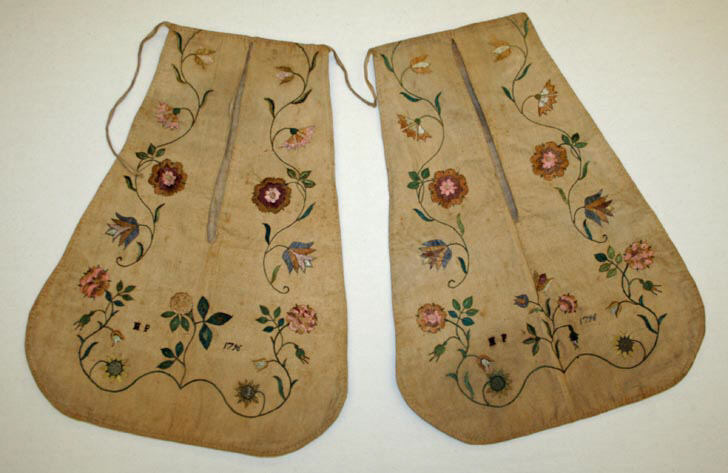 Dress & Power · Free to read
A Pocket Is a Question of Access
A detachable eighteenth-century pocket complicates the story that women simply had no useful storage. Look at the opening, the tie and the route of the hand.
Read the essay ↗